

.svg)
 Healthcare
 Finance
 Retail
 SaaS & Digital
 eCommerce
 Education
 Salesforce
  HubSpot
 Pipedrive
 Mailchimp
 Klaviyo
 Zendesk
  Intercom
 Freshdesk
 HelpScout
  Front
Front Jira
Jira Slack
Slack  MS Teams
 Zoom
Zoom Google Sheets
  Zapier
  Integrately
 Make
Make  Webhooks



 Sign In
 MS Teams


TL;DR
-
A popup survey is a short feedback form that appears as an overlay on your website or app, triggered by user behavior like scrolling, time on page, or exit intent. Visitors answer 1-2 questions without leaving the page.
-
Popup surveys vs. feedback buttons vs. embedded surveys: popups catch visitors at a specific moment; feedback buttons are always-on; embedded surveys live inside page content. Different jobs, different tools.
-
Five trigger types let you control when popups appear: time-based, scroll-based, exit intent, action-based, and device/geo targeting.
-
6 real-world examples from brands like Google Meet, Urban Outfitters, MailTag, Slack, Amazon, and Notion show what effective popup design looks like in practice.
-
40+ popup survey questions organized across 8 use cases: post-purchase, cart abandonment, exit intent, product-market fit, content feedback, usability, bug reporting, and demographics.
-
With Zonka Feedback, you can create targeted popup surveys, configure behavior and audience segmentation, and install them with a single JS snippet.
Most teams think they know what's happening on their website. They've got heatmaps. They've got session recordings. They can see where visitors click and when they leave.
But analytics only tells you what people did. Not why they did it.
A visitor abandons the cart. Was it the shipping cost? A confusing checkout flow? A trust issue with the payment page? Your heatmap can't answer that. Your session recording won't say.
This is the gap popup surveys fill. They catch visitors in context, while they're still on the page, still in the experience, still remembering exactly what frustrated them or pleased them. And they do it with one or two questions that take seconds to answer.
No redirect. No email follow-up three days later. No hoping they remember what went wrong.
Popup surveys are one of several website survey methods available to you, but they stand out for one reason: they meet visitors inside the moment, not after it. In this guide, we cover what popup surveys are, how they compare to other feedback methods, when and how to trigger them, real-world examples from brands doing it well, 40+ questions organized by use case, best practices that actually affect response rates, and how to set one up with Zonka Feedback.
Measure Feedback With Popup Survey
Collect in-moment feedback on your website, product, or in-app using effective popup surveys to understand what users need and learn ways to delight your customers.

What Is a Popup Survey?
A popup survey is a short feedback form that appears as an overlay on a website or app, triggered by user behavior like scrolling, time on page, or exit intent. Visitors answer one or two questions without leaving the page they're on.
They can show up in different ways. A centered modal. A slide-up from the bottom. A small popover anchored to a corner of the screen. The format varies, but the principle doesn't: catch the visitor in context and keep the ask small.
Most popup surveys use a single closed-ended question (a star rating, a smiley scale, a yes/no, or an NPS 0-10 scale) followed by an optional open-ended question that asks why. That combination gives you a quantitative signal and a qualitative explanation in under 15 seconds.
They're different from email surveys that land in inboxes days later. Different from feedback forms buried at the bottom of a page. Different from session recordings that show behavior but never explain the reasoning behind it.
Popup surveys tell you what a visitor was thinking while they were still thinking it. That immediacy is what makes them so effective for website feedback. The visitor is still in the experience, still emotionally connected to whatever just happened, and you're catching that reaction before it fades. They're one of the most targeted formats in the broader website surveys toolkit.
.svg)
Popup Surveys vs. Feedback Buttons vs. Embedded Surveys
Before you choose popup surveys, know how they compare to the other two common website feedback methods: feedback button surveys and embedded website surveys. They solve different problems, and understanding the differences helps you pick the right tool for each touchpoint.
| Feature | Popup Survey | Feedback Button | Embedded Survey |
| Trigger | Event-based (time, scroll, exit intent, post-action) | Always visible, user-initiated | Always visible, lives inside page content |
| Intrusiveness | Medium (appears as overlay) | Low (sits in corner until clicked) | Low (part of the page layout) |
| Best for | Targeted, in-moment feedback at specific touchpoints | Continuous, unprompted, always-available feedback | Page-specific or post-content feedback |
| Typical questions | 1-2 (NPS, CSAT, exit reason) | Open-ended or quick rating | Multi-question structured surveys |
| Response rate | Higher (10-30%), catches visitors while engaged | Lower, depends on visitor noticing and choosing to click | Moderate, depends on scroll depth and placement |
| Setup | JS snippet + behavior configuration | Widget code | HTML embed per page |
| When NOT to use | On first page load, during checkout, on mobile full-screen | When you need structured, targeted feedback at specific moments | When you need event-triggered or behavior-based responses |
The short version: use popup surveys when you need feedback at a specific moment. Use a feedback button when you want an always-available channel. Use embedded surveys when the feedback is tied to specific page content — not to a specific moment.
Most teams end up using a combination. A feedback widget on every page for general input, plus popup surveys at high-value touchpoints like post-purchase, exit intent, and onboarding milestones. The combination covers both always-available and event-triggered feedback without survey fatigue.
How to Trigger Popup Surveys on Your Website
The trigger is the single biggest factor in popup survey response rates. Show the survey too early and visitors ignore it. Show it too late and they've already left.
Getting the timing right is the difference between a 25% response rate and a popup that gets dismissed in half a second. Here's what works.
Time-Based Triggers
The popup appears after a visitor has been on the page for a set number of seconds. This gives them time to engage before you ask anything.
For most pages, 15-30 seconds works well. For content-heavy pages like blogs or documentation, go longer: 45-60 seconds. The goal is to ask after someone has had enough time to form an opinion, not before they've even read the headline.
Time-based triggers are the most common starting point. They're simple to configure, they work across page types, and they naturally filter out visitors who bounce within the first few seconds. If a visitor has been on your pricing page for 25 seconds, they've read enough to have a real reaction.
Scroll-Based Triggers
The popup fires after a visitor scrolls past a specific percentage of the page. A 50% scroll depth is the standard starting point. For blog posts or long-form content, 60-70% works better because it catches visitors who've actually consumed the content rather than just landed and started scrolling.
This trigger works especially well for content feedback. If someone scrolled through 70% of your pricing page, they've seen enough to have an opinion worth capturing. And that opinion is more informed than what you'd get from a time-based popup that fires before they've even reached the feature comparison table.
Exit Intent Triggers
The popup appears when the visitor's cursor moves toward the browser's close button or address bar, signaling they're about to leave.
Exit intent surveys are one of the most powerful popup types because they target the exact moment a visitor decides to leave without converting. The question is simple: why are you leaving? The answers are usually revealing.
Maybe it's unexpected shipping costs. Maybe they couldn't find the product in their size. Maybe the pricing page confused them. You won't know unless you ask at the moment they're walking away. Use an exit intent survey template to get started quickly, and you'll be collecting exit feedback within minutes.
Action-Based Triggers
The popup fires after a specific user action: completing a purchase, closing a support ticket, submitting a form, finishing an onboarding step, upgrading an account.
These produce the highest-quality feedback because the visitor just experienced something specific. A post-purchase popup on the confirmation page catches the shopping experience while it's fresh. A post-support-resolution popup catches the service experience before the visitor moves on.
Post-purchase confirmation pages, subscription sign-up screens, feature-activation moments, and post-support-resolution pages are all strong candidates for action-based popup triggers.
Device and Geo Targeting
You can restrict popups to specific devices (desktop, tablet, mobile) or geographic regions. This is useful for localized experiences, region-specific campaigns, or when testing mobile-specific feedback separately from desktop.
One important note on mobile: avoid full-screen popup overlays. Google penalizes intrusive mobile interstitials, and a full-screen survey on a phone screen feels invasive regardless of how good the question is. Keep mobile popups small, bottom-positioned, and easy to dismiss with a visible close button.
Benefits of Popup Surveys
In-Context Feedback at Key Touchpoints
Popup surveys collect feedback at the moment it matters. A checkout-page popup asking "Was anything unclear during payment?" catches friction the moment it happens. Compare that to an email survey arriving three days later, when the visitor barely remembers which page confused them.
You can trigger popups at multiple touchpoints across the customer journey: after landing page views, during product exploration, on confirmation pages, before exit. Each touchpoint reveals a different layer of the experience.
A visitor who just completed a purchase tells you about their buying experience. A visitor who's about to leave tells you about their hesitation. A visitor who's been browsing for five minutes tells you about their navigation experience. Same tool, different moments, completely different insights.
No Sampling Bias
Traditional survey methods often reach a self-selected group: people who open emails, people who visit a specific page, people willing to click through to a separate survey. Popup surveys reduce that bias by reaching visitors directly within their browsing session.
An exit intent popup, for example, targets every visitor who's about to leave without completing a transaction. You hear from the visitors who would otherwise disappear without saying a word. These are often the most valuable voices to capture, because their reasons for leaving are exactly the problems you need to fix.
Clean Website Experience
Unlike embedded website surveys that permanently occupy page real estate, popup surveys don't take up any space until they're triggered. Your page stays clean. The survey appears only when it's relevant, then disappears after the visitor responds or dismisses it.
This matters for design-conscious brands. Your landing page or product page can maintain its intended layout and visual hierarchy without accommodating an always-present survey block. The feedback mechanism is invisible until the moment it's needed.
Anonymous Feedback Collection
Many of your most informative visitors are anonymous. They haven't signed up. They haven't shared an email. They haven't created an account. But they have opinions.
Popup surveys let you collect feedback from these visitors without requiring any personal details. First-time visitors who haven't registered can still tell you what confused them about your pricing page, what they were looking for but couldn't find, or why they chose not to sign up.
This anonymous channel is especially valuable for understanding top-of-funnel behavior. The visitors who never convert are the ones whose feedback is hardest to get — and most important to hear.
Targeted Audience Segmentation
You can show different popup surveys to different visitor segments. Show a design feedback popup only to visitors arriving from a paid campaign. Show a usability survey only to returning visitors. Show a checkout feedback popup only to visitors who completed a purchase. Show an exit survey only to visitors with items in their cart.
This precision means you're asking the right questions to the people who can actually answer them. A first-time visitor from a Google Ad has a different experience to evaluate than a returning customer who's been using your product for six months. Segmented surveys reflect that difference.
Popup Survey Examples: How Real Brands Use Them
The difference between a popup survey that gets 25% response rate and one that gets ignored comes down to three things: timing, design, and question relevance. These brands get all three right.
Google Meet: Post-Meeting NPS Popup
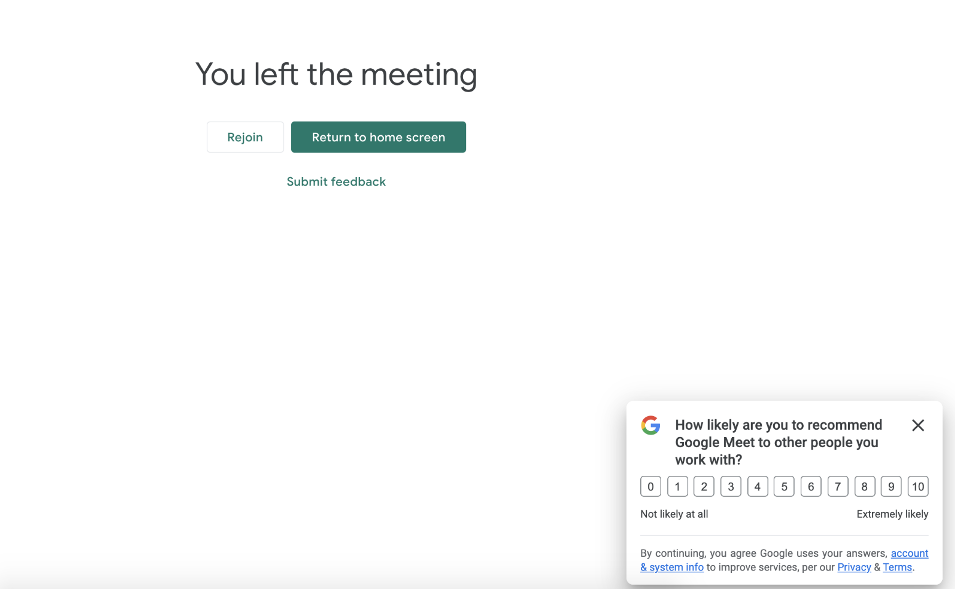
Google Meet shows an NPS rating question immediately after users exit a meeting. The timing is precise: you've just finished the experience, the quality is fresh in your mind, and rating it takes five seconds.
What makes it work: one question, right after the event, no extra clicks required. The simplicity drives response volume, and the NPS scale gives Google a standardized metric to track meeting quality over time. There's no delay, no email, no separate survey page. You rate the experience and move on.
Urban Outfitters: Permission-Based Website Feedback
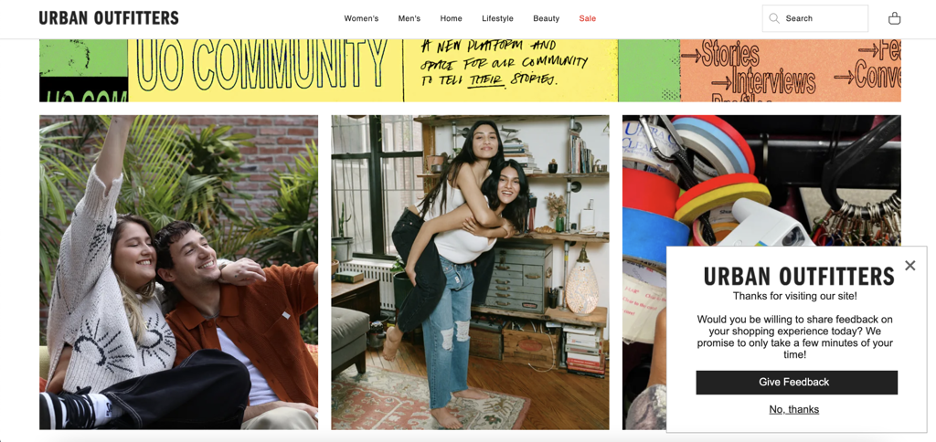
Urban Outfitters doesn't immediately serve a survey. They ask for permission first: "Mind sharing quick feedback?" It's a small touch, but it gives the visitor a sense of control and reduces the annoyance factor significantly.
What makes it work: the popup is subtle, visible without being intrusive, and it respects the browsing experience by asking before surveying. Psychologically, giving visitors the choice to participate increases both willingness and response quality.
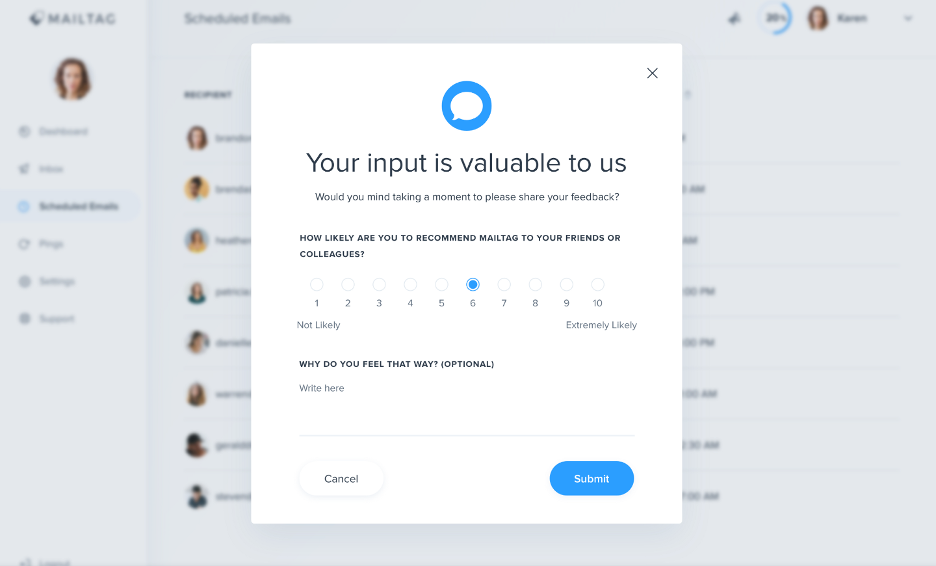
MailTag: Minimal NPS Popup
MailTag's survey popup uses a clean design with a blue-and-white color scheme that matches their product aesthetic. The NPS scale is clearly laid out, and a small text box invites optional feedback without demanding it.
What makes it work: visual simplicity, brand-consistent design, and a low-effort interaction that doesn't feel like a chore. The color scheme blends with the product rather than shouting for attention.
Slack: Post-Huddle Experience Survey
After a Slack Huddle ends, a quick satisfaction survey slides up asking about call quality and experience. It's tied to a specific event (the huddle you just finished), which makes the feedback contextual and specific rather than generic.
What makes it work: event-triggered timing, contextual relevance, and a non-intrusive slide-up format that doesn't block the workspace. You can answer in two taps or dismiss it instantly.
[Screenshot needed: Slack's post-huddle survey slide-up]
Amazon: Post-Delivery Feedback Popup
When you log into Amazon after a delivery, a popup asks about your delivery experience, specifically about that order. Not a vague "how was your experience?" but a targeted question tied to the product you received.
What makes it work: specificity. The question is about that delivery, not your general feelings about Amazon. Specificity produces specific, useful feedback that the logistics team can actually act on.
[Screenshot needed: Amazon's post-delivery feedback popup]
Notion: Feature Feedback Slide-Up
Notion occasionally shows a small slide-up survey after you've used a specific feature, asking whether it met your needs. It targets active users of that feature, not everyone in the app.
What makes it work: feature-specific targeting means you're asking people who actually used the thing you're asking about. The slide-up format is non-intrusive and easy to dismiss. And because it appears after genuine feature usage, the feedback reflects real experience rather than abstract opinion.
[Screenshot needed: Notion's feature feedback slide-up]
Popup Survey Questions for Every Use Case
The right question depends on the right moment. Here are 40+ popup survey questions organized by the use case they serve, with trigger recommendations for each.
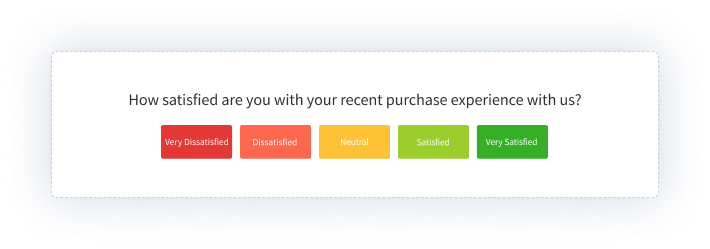
Post-Purchase Survey Questions
Trigger on the order confirmation page or 24 hours post-delivery.
A customer who just completed a purchase is in the best position to tell you about the buying experience. They've navigated your site, evaluated your products, gone through checkout, and made a decision. Their feedback reflects every step of that journey.
-
How would you rate your overall shopping experience with us?
-
Did you encounter any issues while completing your purchase?
-
How would you rate the availability of payment options?
-
How likely are you to make another purchase in the future?
-
On a scale of 0-10, how likely are you to recommend us to someone you know?
-
We'd love to know the reason for your rating.
-
Is there anything specific we could improve about the buying process?
(Start quickly with a post-purchase survey template.)
Cart Abandonment Survey Questions
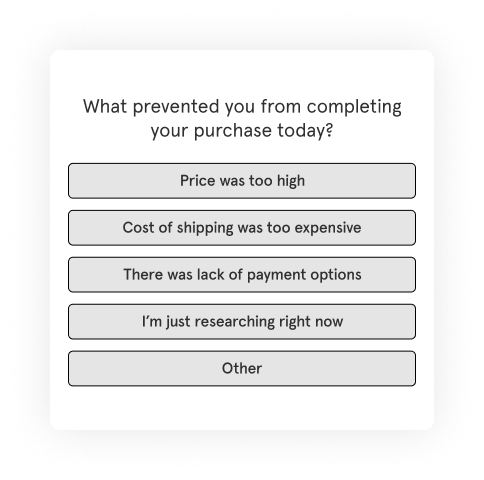
Trigger as an exit-intent popup when a visitor with items in cart moves to close the tab. Understanding the reasons behind cart abandonment is the first step to fixing it.
Cart abandonment surveys capture the moment of hesitation. Something stopped the visitor from completing the purchase. Was it price? Trust? A confusing checkout? The only way to know is to ask before they close the tab.
-
What stopped you from completing your purchase today?
-
Did you encounter any issues during checkout?
-
Did you find any unexpected costs added to your order?
-
Did the payment options feel convenient and secure?
-
Is there anything we can do to help you complete your purchase?
(Use a cart abandonment survey template to get started.)
Exit Intent Survey Questions
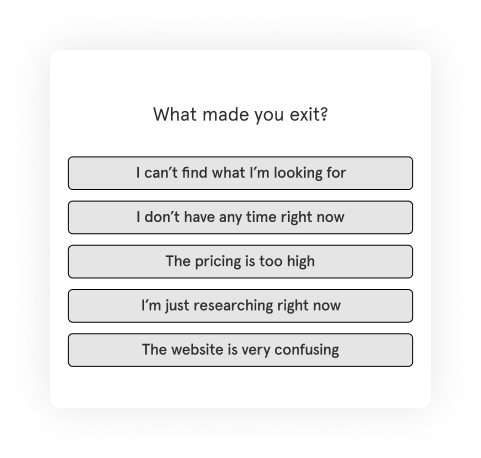
Trigger when the cursor moves toward the browser bar or back button. For a deeper look at exit intent surveys and advanced targeting strategies, we cover that separately.
Exit intent popups catch the hardest-to-reach audience: visitors who are leaving without converting. Their reasons are often the most actionable feedback you'll get, because they point directly to what's preventing conversions.
-
Is there a specific reason you're leaving today?
-
Were you able to find what you were looking for?
-
Were you able to achieve your goal on our website?
-
Is there anything we could do to convince you to stay?
-
How likely are you to visit us again?
-
On a scale of 0-10, how likely are you to recommend this website to a colleague?
(Build yours with an exit intent survey template.)
Product-Market Fit Survey Questions
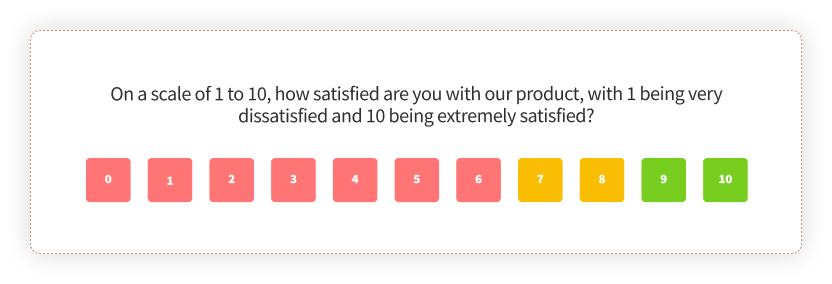
Trigger after a user has been active for 2+ weeks. This is the Sean Ellis test, and it's one of the most important signals you can collect for product strategy.
The core PMF question ("How would you feel if you could no longer use this product?") separates casual users from genuinely dependent ones. If fewer than 40% say "very disappointed," you have work to do on product-market fit.
-
How did you discover our product?
-
How would you feel if you could no longer use our product?
-
Based on your experience, how likely are you to recommend this product to a friend?
-
How essential is our product to your daily workflow?
(Customize a product-market fit survey template to match your product.)
Content Feedback Survey Questions
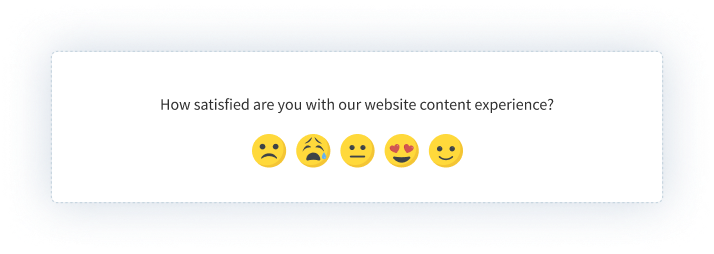
Trigger after 60% scroll on a blog post or knowledge base article. If your readers made it that far, they have a real opinion about what they just read.
Content feedback helps you understand whether your blog posts, guides, and documentation are actually helping visitors. A high bounce rate on a help article might mean the content is confusing, too long, or not addressing the right question. These surveys tell you which.
-
How would you rate the quality of this content?
-
Did you find this content helpful and informative?
-
Was the content easy to understand?
-
Was the length appropriate?
-
Is there anything you'd add or change?
(Start from a content rating survey template or a blog feedback survey template.)
Website Usability Survey Questions
Trigger after 2+ page views or 45 seconds on site. These questions help identify navigation and design issues that analytics alone can't explain. For a deeper look at website usability surveys, we cover those separately.
Usability feedback reveals the gap between what you designed and what visitors experience. Your navigation might make perfect sense to your team, and still confuse every third visitor.
-
How easy was it to find what you were looking for?
-
Did you encounter any difficulties navigating our website?
-
How would you rate the overall design and layout?
-
Is there anything specific that frustrated you?
-
How likely are you to return to our website?
(Use a website usability survey template to get started.)
Bug Reporting Popup Questions
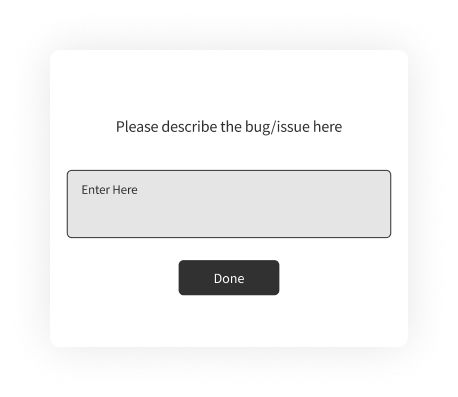
Trigger on error pages or after a failed form submission. These catch issues your QA process missed, reported by the people who actually hit them.
Bug reports from real users are more valuable than most teams realize. They come with context: which browser, which flow, which page, which action caused the error. A popup triggered at the moment of failure captures all of that.
-
Please describe the issue you encountered.
-
Have you seen this issue before?
-
Have you tried any troubleshooting steps?
-
Would you like us to follow up with you about this issue?
(Set up a bug reporting survey template in minutes.)
Demographic Survey Questions
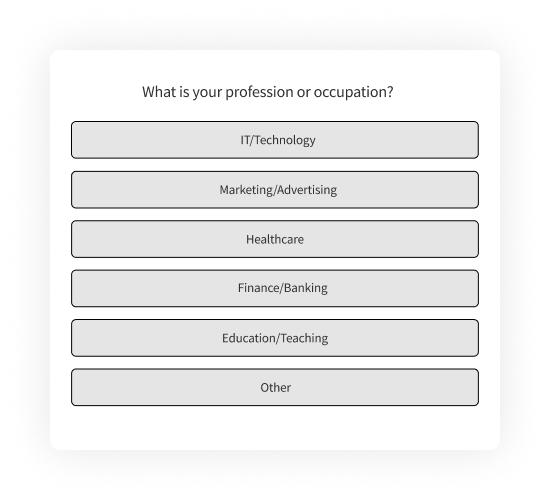
Use sparingly. Trigger for first-time visitors only, and keep it to two questions max. These help with segmentation, not satisfaction.
Demographic data helps you understand who your visitors are so you can tailor experiences, campaigns, and products more precisely. But keep the ask light. Visitors don't owe you their demographics, and a heavy demographic popup will hurt response rates across the board.
-
What is your age group?
-
How often do you visit our website?
-
How did you hear about us?
-
Are you a registered member?
-
What industry do you work in?
Popup Survey Best Practices
Keep It to 1-2 Questions Per Popup
Completion rates drop sharply after three questions. Lead with one closed-ended question (an NPS scale, a CSAT rating, or a CES score) and follow with one optional open-ended question asking why. That's it.
The closed-ended question gives you quantitative data you can track over time. The open-ended follow-up gives you the context behind the number. Two questions. Two types of insight. Anything more and you're building a survey, not a popup.
Time Your Popup Right
The wrong timing kills response rates before the question even matters. Here's what works by page type:
-
Homepage or landing page: 20-30 seconds delay
-
Product or pricing page: Exit intent trigger
-
Blog or content page: 60% scroll depth
-
Post-purchase: Immediately on the confirmation page
-
Never: On first page load, mid-checkout, or as a full-screen mobile overlay
The pattern is consistent: ask after the visitor has had enough time to form an opinion about something specific. Too early and they have nothing to say. Too late and they're already gone.
Use CX Metrics as Your Lead Question
NPS, CSAT, and CES work well as popup survey lead questions because they're quick to answer, produce a numeric score you can track over time, and they pair naturally with an open-ended follow-up.
Use NPS for relationship-level feedback and loyalty signals. Use CSAT for transaction-specific satisfaction. Use CES when you want to know how easy or hard a specific interaction was. Each metric has its sweet spot, and matching the metric to the touchpoint matters more than which metric you pick.
Segment and Target
Don't show the same popup to every visitor. Show post-purchase surveys to buyers. Show exit intent surveys to leavers. Show feature feedback surveys to active users of that feature. Show campaign-specific surveys to visitors from specific referral sources.
Segmentation is the difference between useful, targeted feedback and noise. A first-time visitor from a Google Ad has a different experience to evaluate than a returning customer who's been using your product for six months. Your popup should reflect that difference.
Design for Mobile
Mobile visitors are half your audience or more. Keep mobile popups small and bottom-positioned. Make the dismiss button large and visible. Don't use full-screen overlays. Google's interstitial penalty applies, and even without the SEO risk, a full-screen popup on a phone feels invasive.
Test on actual devices before launching. What looks fine in a desktop preview can be unusable on a phone screen. The close button that's easy to tap on your laptop might be impossible to hit on a 5-inch display.
Set Frequency Caps
Nobody wants to see a survey on every page they visit. Set a cap: one popup survey per visit, maximum. Don't re-show to visitors who already responded or actively dismissed the survey.
Use session-based or cookie-based frequency controls. Respect the visitor's time and attention, and your response quality goes up. The irony of survey fatigue is that showing more surveys gets you less useful data — not more.
How to Create a Popup Survey with Zonka Feedback
Step 1: Create Your Survey
Log in to your Zonka Feedback account and click 'Add Survey.' You'll see three options: pick a pre-built template (CSAT, NPS, exit intent, and dozens more), use AI to generate a survey based on your goal, or click 'Start from Scratch' to build your own.
Step 2: Select Popup as Your Widget
Choose 'Website and Web Apps' as your distribution method. From the available widget types, select 'Popup.' Other options include Side Tab, Popover, Bottom Bar, and Slide Up, each suited for different feedback contexts. Click 'Continue.'
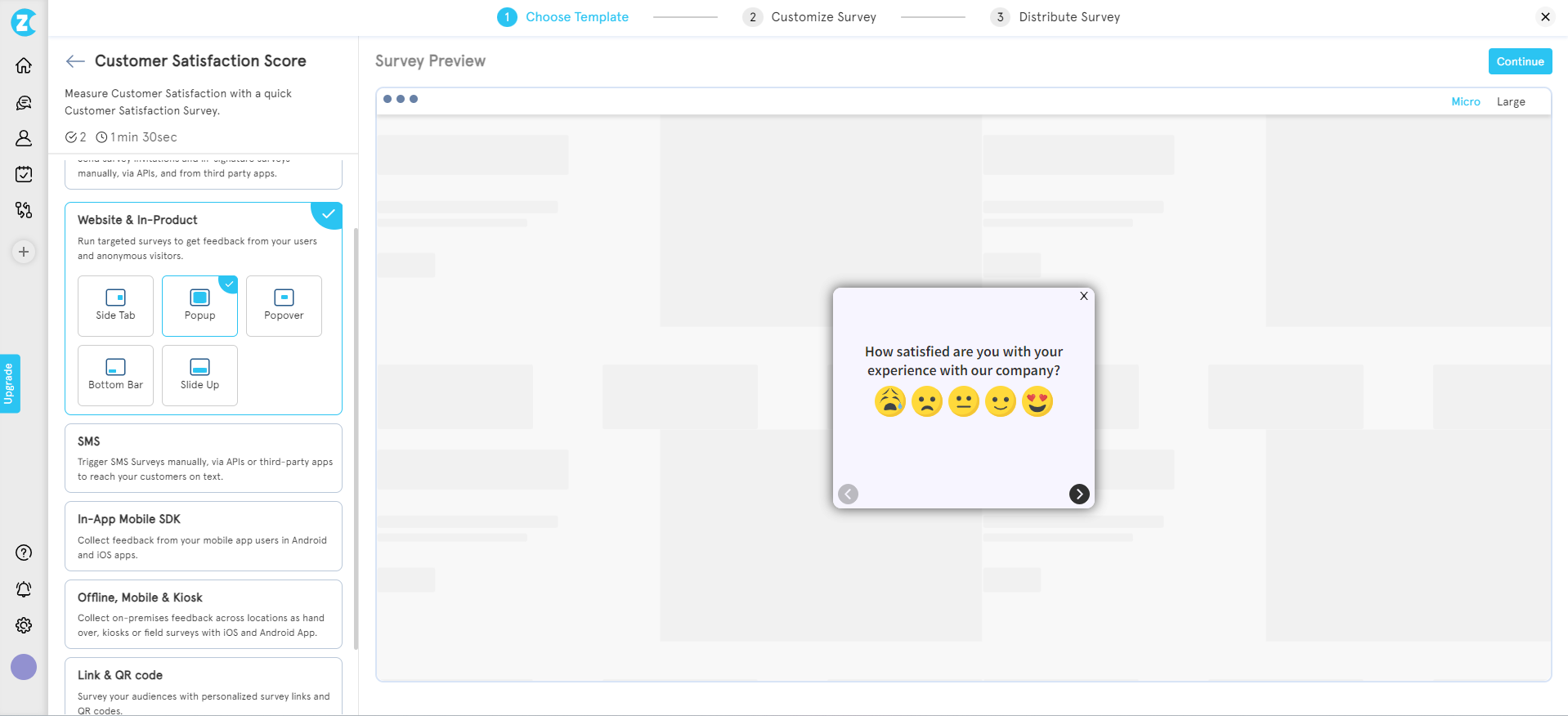
Step 3: Customize Questions and Design
Edit your questions in the survey editor. Add questions, reorder them, choose question types (rating scales, open-ended, multiple choice), and configure contact fields if needed.
Then fine-tune the experience:
-
Survey logic: Set up survey logic and branching for personalized flows. Visitors who rate you 9-10 can see a different follow-up than visitors who rate you 0-6.
-
Design: Match your website's look with themes, logos, background colors, and a welcome screen. Brand-consistent design increases trust and completion rates.
-
Languages: Choose languages for multi-language surveys to reach a broader audience.
-
Variables: Pre-fill visitor data to enrich reporting without asking extra questions.
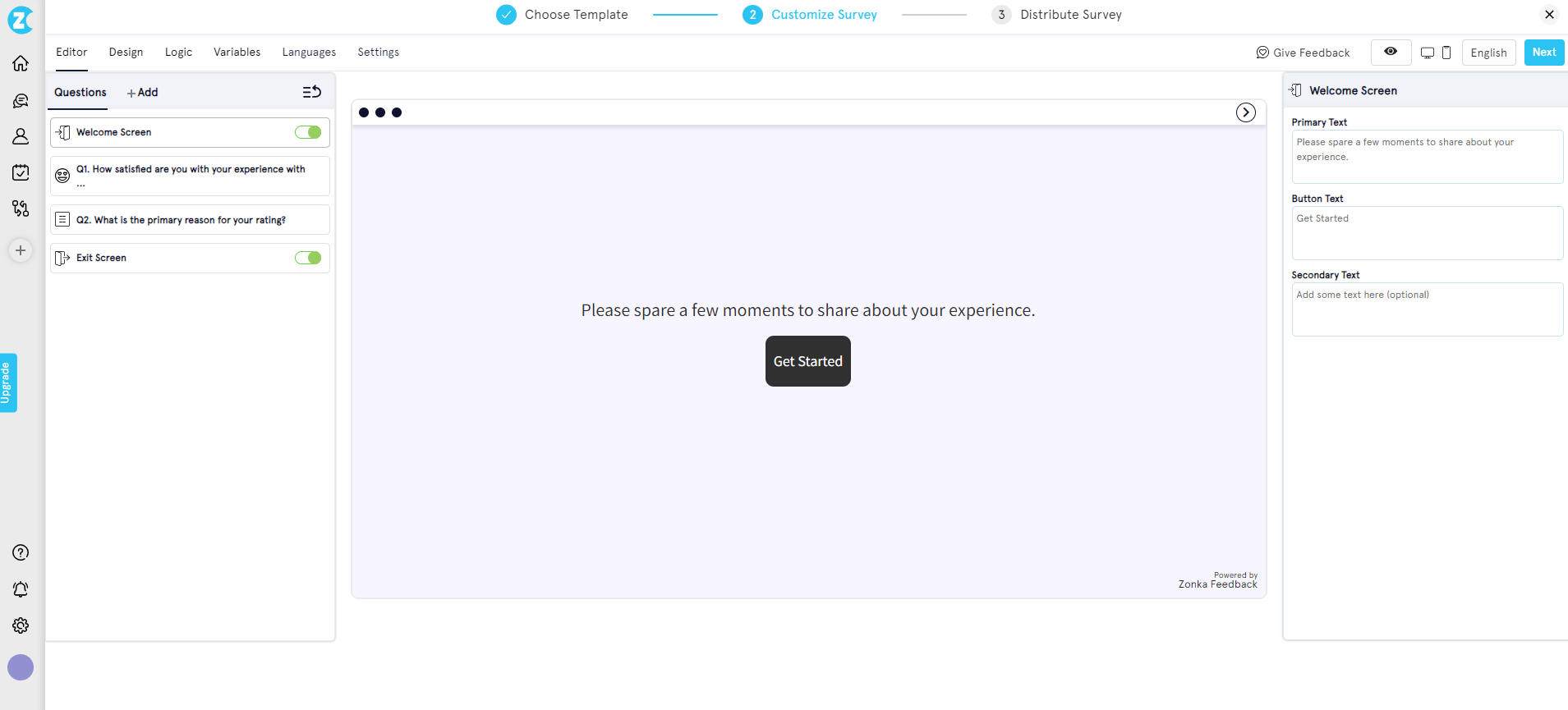
Step 4: Configure Popup Behavior and Targeting
This is where you control who sees the popup, when, and how often.
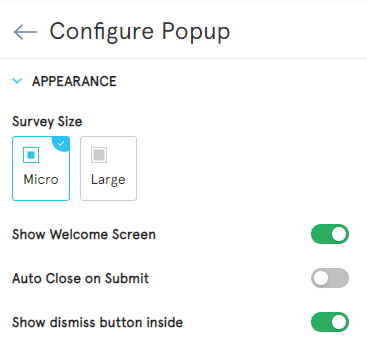
Appearance: Set popup size, enable or disable the welcome screen, turn on auto-close after submission, and show or hide the dismiss button.
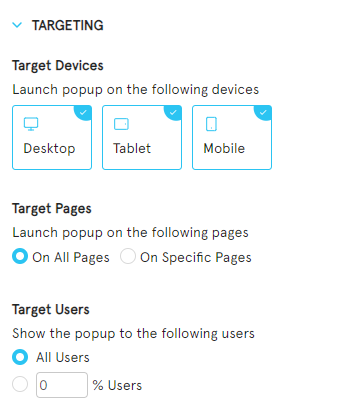
Targeting: Choose which devices (desktop, mobile, tablet), which pages (entire site or specific URLs), and what percentage of visitors see the survey. You can run the popup across your whole website or restrict it to your pricing page, checkout flow, or blog.
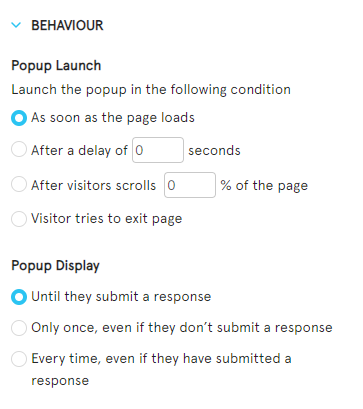
Trigger timing: Pick from immediate on page load, delayed by a set number of seconds, or scroll-based at a specific percentage threshold. Match the trigger to the feedback type: post-purchase gets immediate triggers, content feedback gets scroll triggers.
Frequency: Show until response submitted, show once only, or show repeatedly.
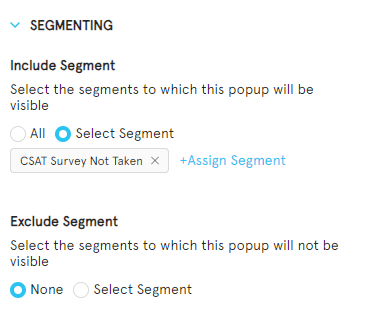
Segmentation: Include or exclude specific user segments based on behavior, demographics, or custom attributes. Target new visitors separately from returning ones, or exclude visitors who responded to a different survey this session.
Step 5: Install and Launch
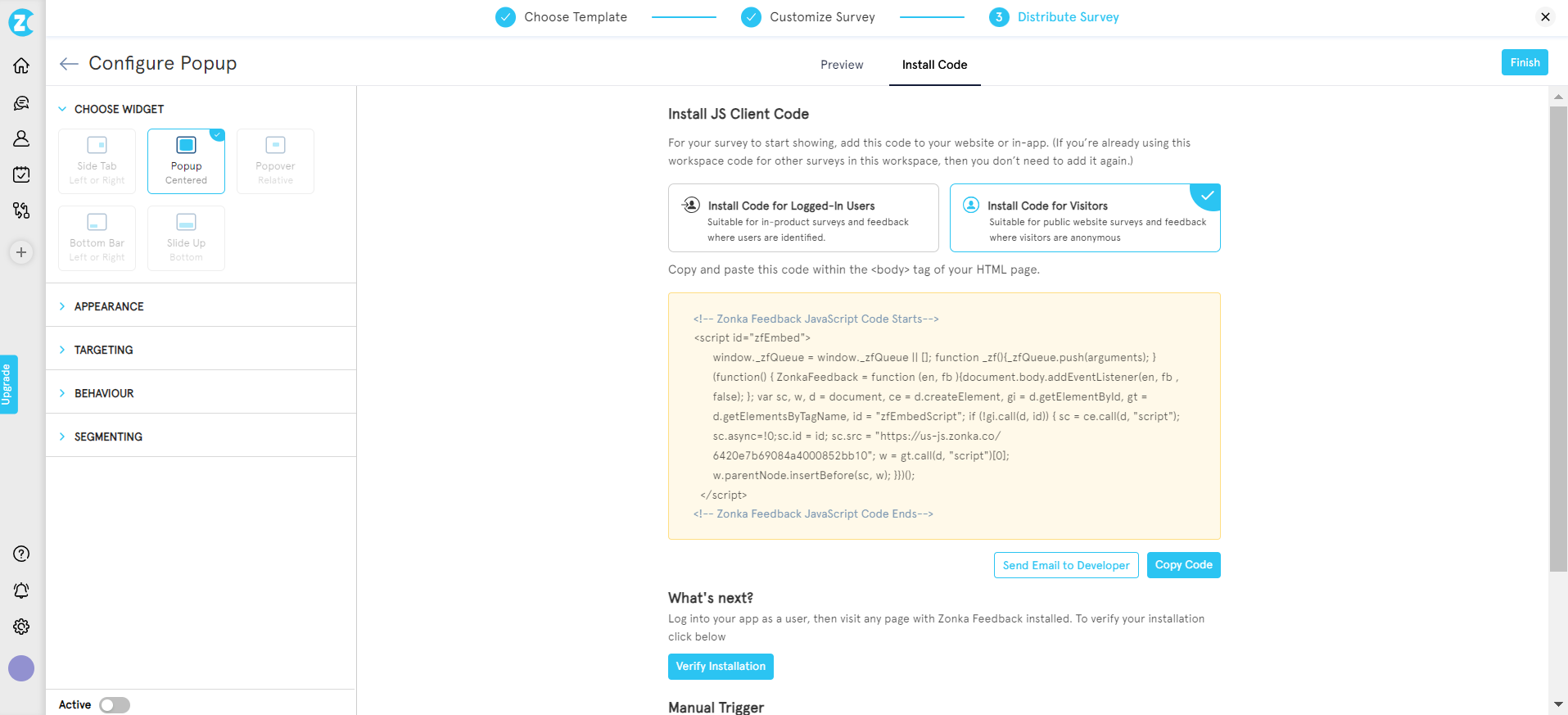
Copy the JS Client Code snippet from the Install section in your Zonka Feedback dashboard. Paste it into your website's HTML before the closing </body> tag.
One code snippet handles all widgets in the workspace. If you add new popup surveys later, there's no need to reinstall the code. Click 'Finish' to launch your popup survey.
Want to see this in action? Schedule a demo to walk through popup survey setup with our team.
Collect In-Moment Website Feedback with Popup Surveys
Popup surveys work because they ask the right question at the right moment to the right person. Not three days later. Not to a random sample. Not buried at the bottom of a page nobody scrolls to.
The brands that get the most out of them do three things consistently: they trigger at moments tied to specific actions, they keep the ask to one or two questions, and they close the loop on what they learn.
With Zonka Feedback, you can build targeted popup surveys with behavior-based triggers, audience segmentation, and multi-channel feedback collection, then connect responses to your CRM, your support tools, and your product roadmap to close the feedback loop effectively.
Whether you're measuring satisfaction after a purchase, understanding why visitors leave, or collecting feature feedback from active users, website surveys start with asking the right question at the right time. And popup surveys are how you get there.
Schedule a demo to see how it works for your team.